
Legal Literacy at Work
LLAW transforms lived experience into legal literacy and impact. Shared learning generates community-driven insights enabling transformation of lives, laws, and systems. The process of collaboration and co-authorship produces trauma-informed, legally literate advocates and leaders ready to move into sustained roles in legal advocacy, policy, and education.
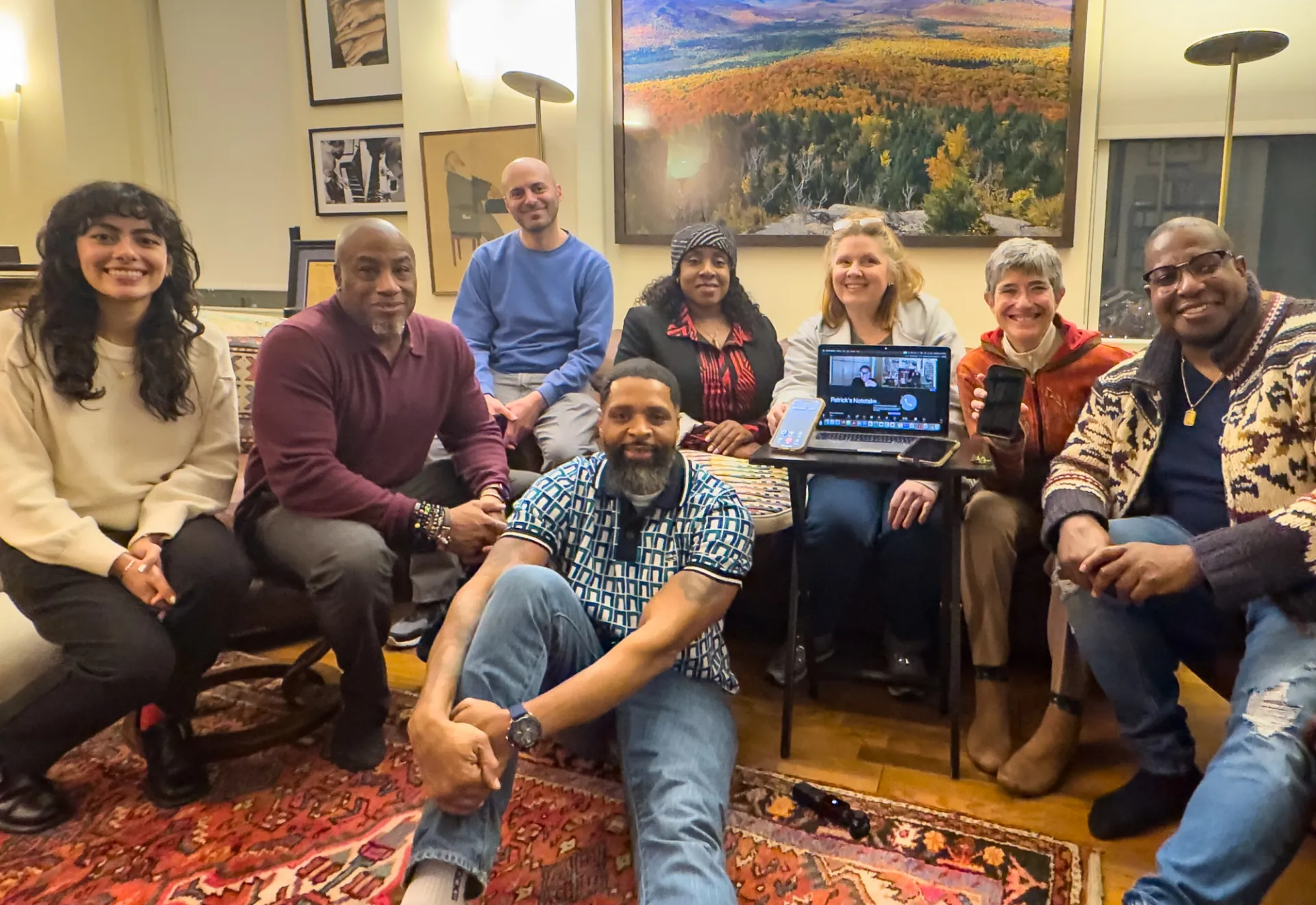
An annual cohort of twelve currently and formerly incarcerated fellows attend weekly workshops and collaborate with law students to revise resources on legal rights for relevance, clarity, and practical use inside prison and after release. Each fellow receives an annual stipend in recognition of their work. Fellows also earn college credit from College Unbound, receive mentorship from practicing lawyers, and are placed inside legal and policy projects, using their skills and experience to advance advocacy and systems change.
- Workshops – Weekly sessions build legal knowledge over ten months, developing skills and legal literacy to support collaboration and advocacy inside fellows’ communities.
- JLM Co-Authorship – Fellows work alongside law students to revise and co-author chapters of the Jailhouse Lawyers Manual, with hands-on support from LLAW leadership.
- Critical participatory action research – Fellows learn and practice research grounded in learning with and from those directly affected by the carceral system.
- Lawyer Mentorship – Practicing attorneys mentor fellows throughout the program, providing guidance on legal analysis, advocacy, and professional development.
- Policy and Advocacy Placements – Fellows are placed with legal and policy organizations, including New York City bar committees, to work on access to justice and systemic reform.
- College Credit – Earned credit from College Unbound supports pathways into higher education and professional advancement.
The LLAW Fellowship aims to build the capacity of people affected by incarceration to
- Advocate for themselves and others in and after prison
- Work effectively with lawyers, law students, and policymakers on increasing access to justice
- Enlist LLAW fellows in making legal resources more accessible to people in and after prison
- Build collective efficacy in using the law as part of a broader effort to improve the civic agency of communities affected by incarceration.
Legal Knowledge & Access
Increase accessibility of essential legal resources (e.g., Jailhouse Lawyer’s Manual) for system-impacted individuals and communities.
Collaborative Community Building
Strengthen networks of system-impacted fellows, law students, lawyers, and community allies rooted in cultural competence, mutual learning, shared leadership, and participatory research practices.
Leadership & Mentorship
Develop sustained educational and mentorship pathways that support justice-impacted fellows in becoming effective legal advocates, leaders, and contributors within communities and legal systems.
Capacity for Systemic Change
Build organizational and community capacity to challenge structural barriers to justice and expand legal empowerment practices.
The legal system requires fundamental change. People directly affected by incarceration understand both the importance of the law and the ways legal institutions fail. Meaningful reform promoting transformation requires their experience and full participation.
LLAW positions people closest to these failures as co-educators and leaders, infusing legal education, advocacy, and reform with lived reality and deep commitment to the full participation of communities affected by incarceration and injustice.
Learn more about the incredible LLAW Fellows here.
The Center for Institutional and Social Change partners with
- The New York City Bar Association’s Office of Diversity Equity Inclusion and Belonging
- The Jailhouse Lawyers Manual published by the Columbia Human Rights Law Review
- College Unbound
- ITHAKA
Stacy Burnett
Senior Product Manager,
JSTOR Access in Prison, ITHAKA
Reggie Chapman
Director of Policy, the Fortune Society
Dominic Dupont
Researcher,
Center for Justice Columbia University
Dr. Robert Fullilove
Professor of Clinical Sociomedical Sciences
and Co-director of the Cities Research Group
at the Mailman School of Public Health
Nicole Smith Futrell
Professor of Law,
Co-Director of the Defenders Clinic,
CUNY Law School
Susan Sturm
LLAW Co-Director
Director, Center for Institutional and Social Change
and George M Jaffin Professor of Law & Social Responsibility,
Columbia Law School
Tony Windley
LLAW Co-Director
and CEO, Brain-Body Sequences Consulting Services,
and Director of Education & Training,
Second Chance University